Smart home: the decisions you should not underestimate
My talk at BurgasConf 2026. How a single temperature sensor gradually becomes a system, and which decisions along the way carry the most weight.
A smart light switch looks great in the shop. It fits in the box in the wall, talks to your phone and needs no new cables. Its electronics, though, sit sealed behind the plaster and give off heat the whole time. The question that rarely gets asked at the till is what this will look like in five years, and what it will cost to replace when it breaks.
The other way is to put all the electronics in one central, accessible place and run cables from there to the switches and appliances. Maintenance becomes easy: everything is visible, everything can be replaced without breaking walls. You pay the price up front, with more cables, more planning and more work before the home lights up at all.
In my home I chose the second way, and that is why my panel is full of cables. At first glance it looks like chaos. In fact every cable is the trace of a decision that could have been made differently.
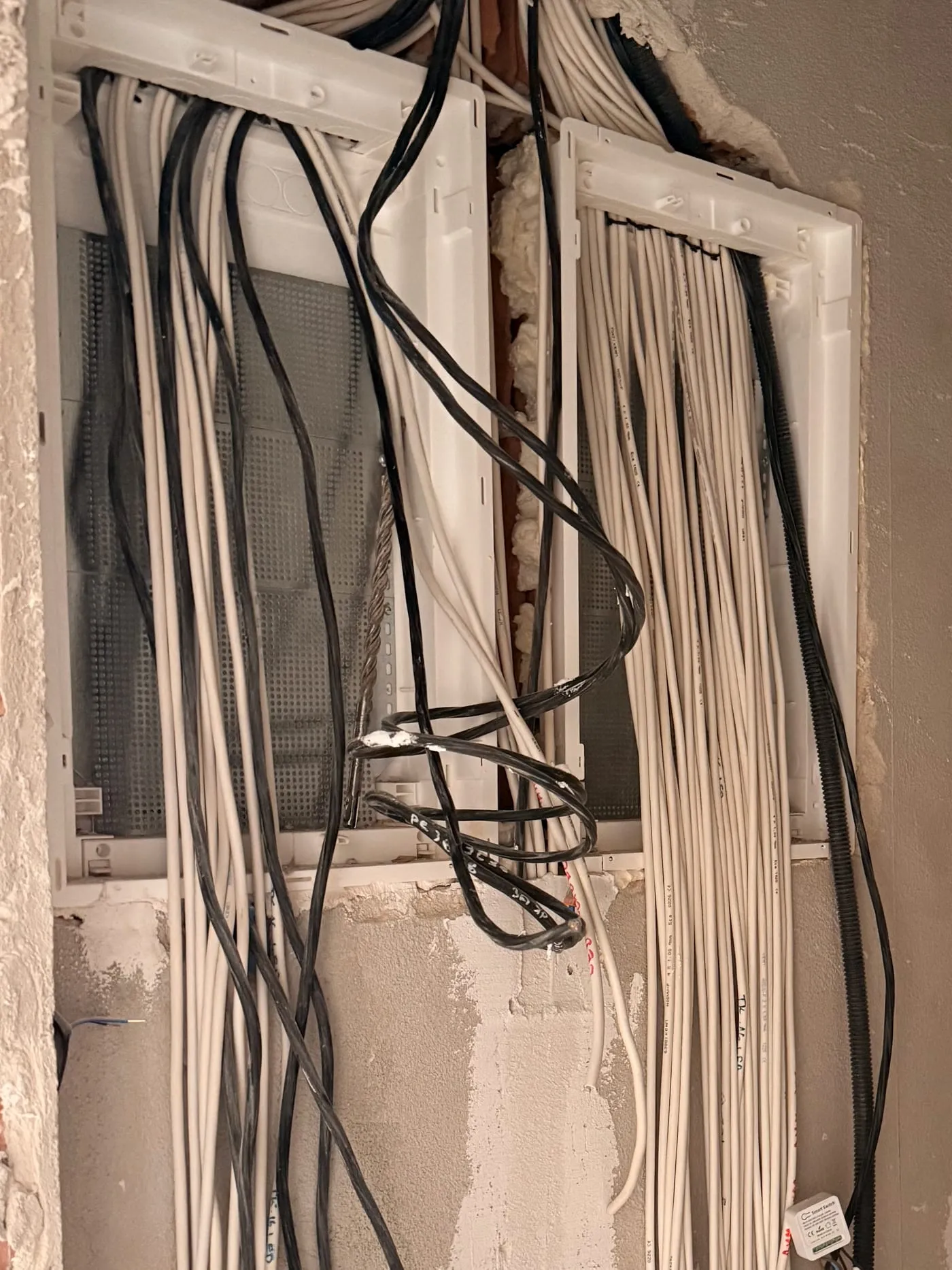
I talked about these decisions on 25 July at BurgasConf 2026 in the talk “Smart home: the decisions you should not underestimate” („Смарт хоум: Решенията, които не са за подценяване“). Here I go through them in order: what problem I faced each time, what the options were and why I chose the one I did. Good architecture almost never means a perfect solution, because there usually is none. It means the trade-offs were made consciously.
It all started far more modestly than a panel full of cables: with one temperature sensor and curiosity about how things work.
How one sensor becomes a system
In the chain below, each step starts with the situation that forced it and continues with the decision I made.
The architecture in brief
The system has several layers. At the bottom is the physical world: sensors, switches, controllers, lighting, heating, blinds. They use different protocols and come from different manufacturers.
Above them is the communication layer, which translates every protocol into a shared model. Only on top of that model does the automation run. Thanks to this separation, changing one technology affects only the layer that talks to it, and the rest of the system never notices the change.
A home that calls you
Most home automations react to a command or an event. It is more useful when the home reaches out to the person at the right moment, for example with a call saying the iron has been left on and asking whether to switch it off.
There is an important line here. The home must not become one more voice with an opinion about everything. It should speak rarely and to the point. All of this can run on local language models, with no required connection to the cloud.
Technology that helps people
Comfort is the easiest part of a smart home. The bigger value is in systems that help people: sensors that recognise a fall or another unusual situation, or a camera that reads text aloud for someone with impaired vision.
What remained open
If we now go back to the panel with the cables, it reads differently: central electronics for maintenance, Zigbee for the small signals, the shared model that allows a change of technology, the rules for safety. One question remained: rules and learning together make the home more useful, but is that enough to call it smart? I picked up that question a month later in Varna, in the talk “Smart home: the truth we would rather not hear”.